How to Split a Big List Into Sending Waves
Short answer: divide your list into two or three groups — your best customers first, then everyone else — and send each wave separately so you can manage the replies and learn from each round.
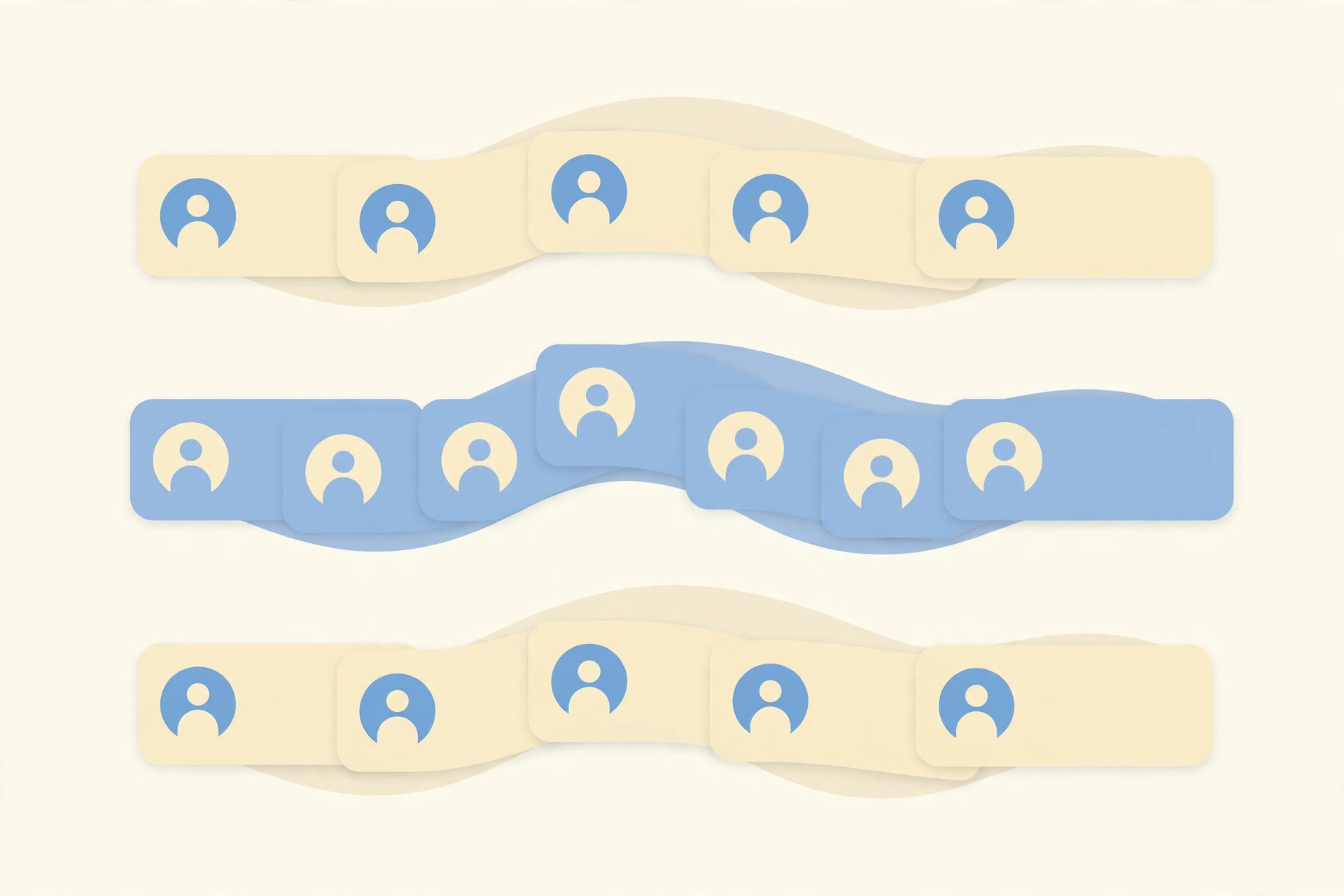
Short answer: a wave is simply part of your list sent at one time. You might send to your most loyal customers first, then to everyone else a day later. Each wave gets its own live report in the panel, and you learn from the first wave before the second goes out.
This article explains how to split a big list into waves, who belongs in each wave, and how the waves fit inside your message package. Waves turn one big nervous send into two or three calm ones.
Why send in waves at all
A big list sent at once means a big pile of replies at once. Waves spread the replies across days, so you can answer properly instead of drowning. One shopkeeper with twenty thousand numbers sends five thousand first, answers the questions, then sends the rest with a better message.
Waves also let you learn cheaply. If the first wave’s replies show that something in the message confused people, you fix it before the second wave goes out. One small change, tested on a small group, improves the whole campaign.
Split by relationship, not randomly
The simplest split is by how well you know them. Wave one: recent buyers and regulars — the people most likely to answer kindly. Wave two: everyone else. Wave three, if you need it: the quiet ones you have not heard from in a while.
Label each list clearly when you share it with the team — 'regulars', 'rest', 'quiet'. Clear labels mean clear reports later. And keep the splits honest: nobody should appear in two waves, or they will get the message twice and wonder why.
What each wave teaches the next
After the first wave, read the replies before you send the second. If three people asked the same question, the message was unclear — add the answer to the next wave's version. If nobody replied at all, the offer may need rethinking, not just resending.
Change one thing at a time between waves. Change the opening line or the offer, not both, so you know what made the difference. Replies come back to the panel for every wave, and you answer the replies yourself — the learning is in the answering.
Waves and your package
Waves do not cost extra — a message is a message, whichever wave it belongs to. Count the messages across all your waves and match the total to a package: 3,000 messages for PKR 2,999, 10,000 for PKR 6,999, 30,000 for PKR 14,999, 50,000 for PKR 19,999, or 100,000 for PKR 26,999. There are no setup fees, no per-message fees, and no API costs.
Two or three waves are enough for almost every business; more waves just mean more bookkeeping. Keep it simple, send the first wave, learn from it, and let the rest follow. To talk through a wave plan for your own list, message Venture SMS on WhatsApp and ask for a demo.
Frequently asked questions
Does sending in waves cost more?
No. Your package covers the messages sent, however you split them — with no setup fees, no per-message fees, and no API costs.
How many waves should I use?
Two or three. More waves add bookkeeping without adding learning.
Can the same person be in two waves?
They should not be. Clean your lists so nobody gets the same message twice.
Does each wave get its own report?
Yes. The panel shows a live report for each wave, so you can compare how each group responded.
Ready to try it?
Ask for a demo on WhatsApp first, then pick the package that fits how many people you want to reach.
Buy a package on WhatsApp: 3,000 — PKR 2,999 · 10,000 — PKR 6,999 · 30,000 — PKR 14,999 · 50,000 — PKR 19,999 · 100,000 — PKR 26,999